Design and Development of a Structural Testing Rig
Production of concept to detail design package of a testing rig
Skills:
- Solidworks
- GD&T
- Design for Manufacture
- Design for Assembly
- 2D drawings (BS8888 standards)
Timeline: October 2025 - May 2026
Contibutors:
Krzysztof Kubiak
Alan Williams
Gareth Trimmer
Lee Williams
Natalie Tagg
Matthew Eagles
Matthew Sexton
This project aimed to design a versatile axle testing rig suitable for all JCB off-highway axles, validated through structural analysis. Rig had to facilitate steer, drive of axles with a long fatigue life.
Objectives
1. Create a Rig concept by working through iterative design ideas that accommodate each of the rig’s requirements, integrated into one overall concept.
2. Design the mechanical rig setup, capable of adjustment to accommodate multiple axle dimensions and providing suitable durability when loaded for simulations.
Accomplishments
1. BS8888-compliant engineering drawings with GD&T to support downstream and manufacturing.
2. Fully FEA validated, cost optimized rig design meeting functional requirements.
Skills:
- Solidworks ~ Mould & Surfacing Tools
- 3D Filament Printing
- Design for Assembly
Timeline: May 2026 - June 2026
Contibutors:
Wassim Bouhamadi
Objectives
1. Ensure suitability of geometry for ease of removal from a split mould leveraging SolidWorks Draft Analysis.
2. Determine optimal parting line from fuselage geometry using Draft analysis.
3. Design Split mould with interconnecting components reflecting Bambu X1 Carbon filament 3D printer build capacity.
4. Slice components appropriately optimizing for component strength and print time.
Accomplishments
1. Designed and optimized reusable 3d printed mould for Carbon fibre layup of fuselage, capable of withstanding vacuum applied ensure full impregnation and consolidation of the Carbon fibre fuselage.
Skills:
- Research
- Technical Writing
- Design for Manufacturing
- Project Management & Planning
- MATLAB
Timeline: Oct 2024 - April 2025
Contibutors:
Hamed Yazdani Nezhad
Thomas Dale
Objectives
1. Investigate the VARTM Composite Manufacturing process from existing literature.
2. Study the relationship between explored process parameters and determine their effect on resin infusion and void formation in parts from literature via correlation study.
3. Collate data to form the basis for mass production ideal in tabular form.
4. Run VARTM experiment under ideal conditions to validate best recommended practices.
Accomplishments
1. Understood and quantitatively assessed the VARTM process to provide a best practices recommendation paper for mass production of composite UAM structures.
Skills:
- Abaqus (FEA)
- Solidworks
- Design Optimization
- Technical Presentation
- Microsoft Office
- Cross-cultural Collaboration
Timeline: Nov 2024 - Feb 2025
Contibutors:
Videshika Nammuni Arachchge
Objectives
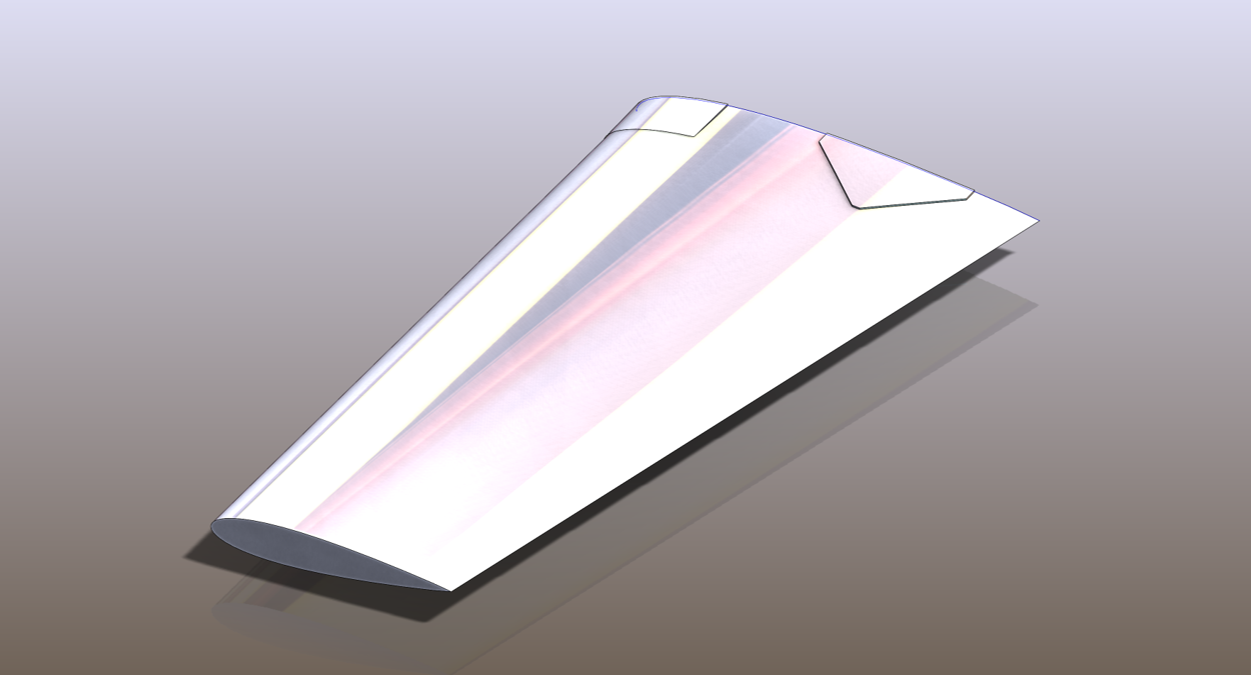
- Work with project partner to Redesign a helicopter stabiliser
1. Recreate 3D model with Solidworks from Engineering drawing of stabiliser
2. Approximate the forces on the stabiliser surface at maximum helicopter cruise speed.
3. Run Abaqus simulations and compare performance (stresses and maximum deflection) of
aluminium and carbon fibre reinforced composite material stabilisers of different designs.
4. Analyse data, conduct sensitivity study, and,
5. Present findings and conclusions in technical Presentation to inform best material and
stabiliser design combination.
Accomplishments
• Generated and determined the best simplified civilian aircraft stabiliser (aluminium) structural design to withstand stresses and minimise tip deflections at top speed by 20% from the base model.
• Optimised stabiliser strength to weight ratio using a carbon composite layup, increasing strength (reducing tip deflection) by 37.5% with 5% weight reduction.
• Utilised Solidworks to create stabiliser geometries and measure weight. Approximated drag-lift forces and performed stress and displacement analysis in mesh convergence, sensitivity studies and to compare design changes.
Skills:
- Solidworks
- Arduino (C++)
- Technical Presentation
- Design Optimization
- Microsoft Office
- Cross-cultural Collaboration
- Project Management
Timeline: Nov 2023 - Feb 2024
Contibutors:
Hugo Wong
Isaac Martin
Menna Al-Aidaros
Seif Al-Assuti
Suwichaya Sasha
Accomplishments
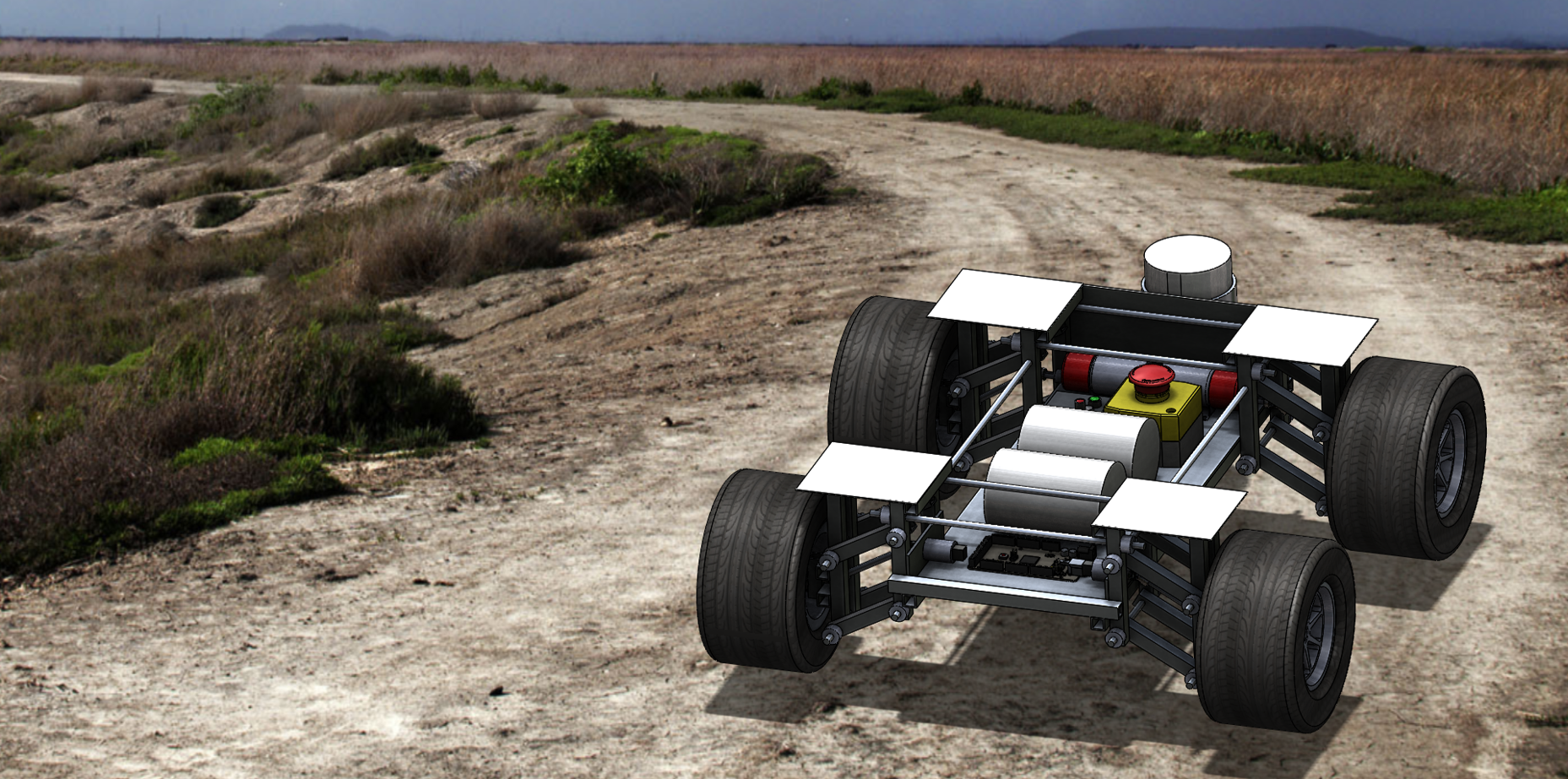
• Engineered a high-powered autonomous buggy leveraging SOLIDWORKS, achieving optimal design specifications that enhanced terrain adaptability by 60% and improved overall durability ratings by 50%.
• Contributed to utilize Simulink for simulating chassis dynamics, resulting in the identification of ideal suspension plate stiffness; this analysis increased acceleration performance by 25% on uneven terrain.
• Integrated Arduino and optical encoders for precise motion control, enhancing direction control while enabling real-time data tracking that provided insights into performance improvements during testing phases.
Skills:
- MATLAB
- Additive Manufacturing (AM)
- Design Optimization
- Cross-cultural Collaboration
- Project Management
Timeline: Feb 2024 - March 2024
Contibutors:
Hugo Wong
Julia Visoci
Dan Fidler
Scarlett Baker
Mishal Saeed
Accomplishments
• Optimized Robot's centre of mass, increasing path accuracy by 70% via modifying weight distribution by incorporating 3D printed PLA in structure.
• Collaborated to optimize pulley belt and wheel dimensions for optimum power and torque transmission.
• Contributed to motor housing component design and to allow dual motor control of robots motion.
• Reduced path travel time by 63% by motor stepping control.
Skills:
- Research
- Technical Writing
- Design for Manufacturing
- Project Management & Planning
- MATLAB
Timeline: Oct 2024 - April 2025
Contibutors:
Hamed Yazdani Nezhad
Thomas Dale
Objectives
1. Investigate the VARTM Composite Manufacturing process from existing literature.
2. Study the relationship between explored process parameters and determine their effect on resin infusion and void formation in parts from literature via correlation study.
3. Collate data to form the basis for mass production ideal in tabular form.
4. Run VARTM experiment under ideal conditions to validate best recommended practices.
Accomplishments
1. Understood and quantitatively assessed the VARTM process to provide a best practices recommendation paper for mass production of composite UAM structures.
Skills:
- Research
- Technical Writing
- Design for Manufacturing
- Project Management & Planning
- MATLAB
Timeline: Oct 2024 - April 2025
Contibutors:
Hamed Yazdani Nezhad
Thomas Dale
Objectives
1. Investigate the VARTM Composite Manufacturing process from existing literature.
2. Study the relationship between explored process parameters and determine their effect on resin infusion and void formation in parts from literature via correlation study.
3. Collate data to form the basis for mass production ideal in tabular form.
4. Run VARTM experiment under ideal conditions to validate best recommended practices.
Accomplishments
1. Understood and quantitatively assessed the VARTM process to provide a best practices recommendation paper for mass production of composite UAM structures.